01 / Public
Purpose, conclusion limits, the invented example and review samples. Research-programme source code is not published.
OPEN METHOD / EXPLICIT BOUNDARIES
A separate educational component demonstrates verification. Review samples explain what a client receives. No internal research-programme implementation is included.
01 / DA-MODEL-002
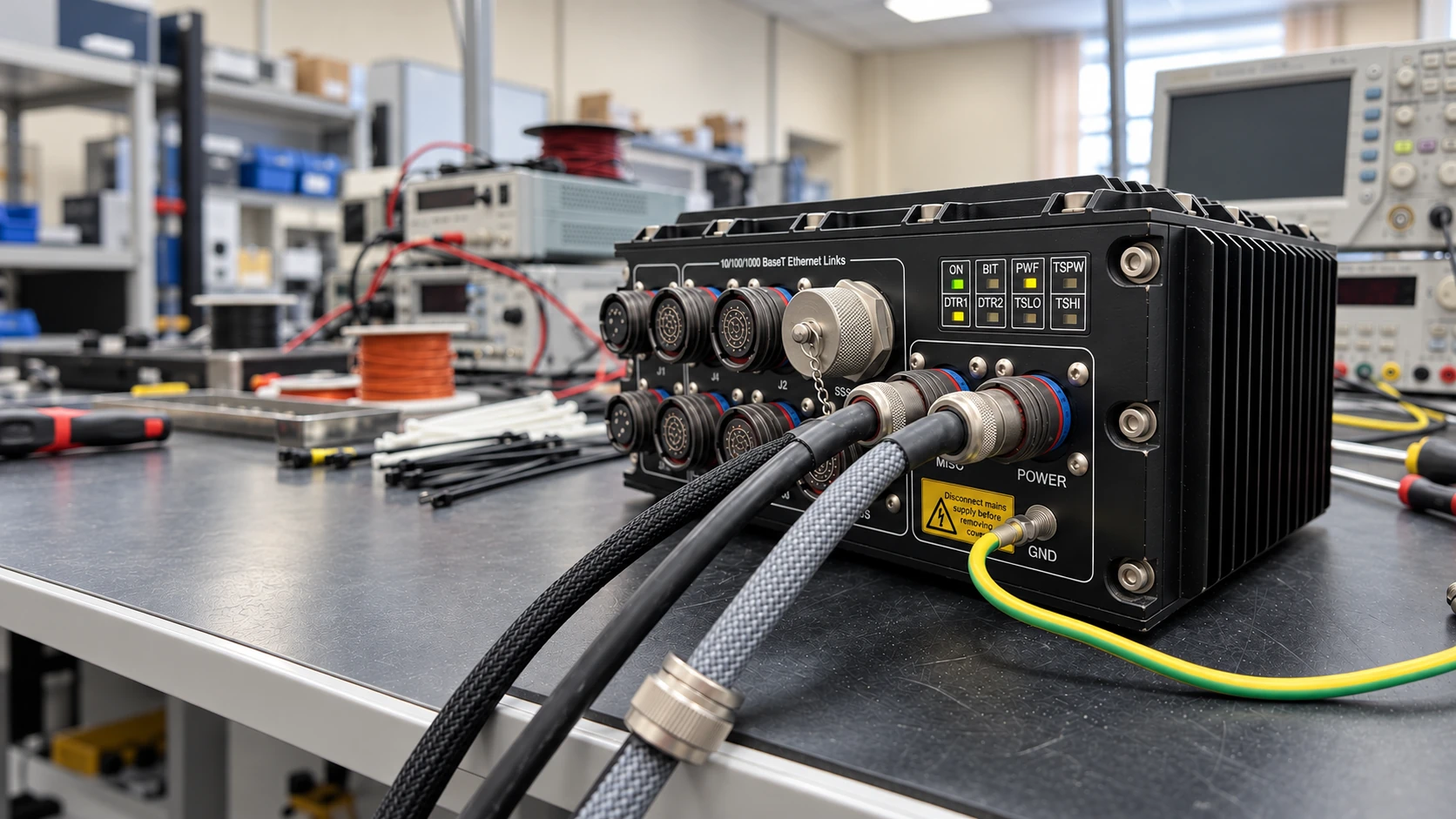
DA-MODEL-002 is an invented lamp bench. The software accepted a command; whether the lamp switched on is a separate question for an external observer.
A request to switch on the indicator.
The software accepted the request. The indicator state is not established.
A fresh report from a trusted observer, bound to this command.
Confirmation requires the current command and a fresh trusted observation. Misbound, stale and forged messages are rejected; replay cannot renew freshness.
PASS · Python 3.12.14 ·
receipt_is_effect
request_1 → receiptwrong_ticket
request_1 → wrong_ticketstale
request_1 → staleforged
request_1 → forgedPython 3.10+ · no external dependencies
python verify.py --report verification.local.json1ba4989109c73bfb1f16bc0787153e13d4e222a055917b2131b5fc612bae2bff02 / Review samples
Two aligned documents for the same invented bench. Identifiers link a trust boundary, a gap, required evidence and a closure criterion.
| Boundary | What crosses it | Trust basis / limitation |
|---|---|---|
| TB-01 · Client → receiver | A command and its identifier. | A receipt establishes acceptance; it is not evidence of indicator state. |
| TB-02 · Receiver → environment | An intention to change external state. | Execution and observation are separate; an effect can occur without confirmation. |
| TB-03 · Observer → assessment | An observation bound to the command. | Source authenticity and measurement accuracy are assumed here. A real system needs separate evidence. |
| TB-04 · Assessment → interface | A status and observation time. | Display “observed”, time and scope; do not turn a past observation into a current-state guarantee. |
| Gap | Impact and required evidence | Closure criterion |
|---|---|---|
| G-01 / TB-03 · High | Observer authenticity is assumed. A trust model, key rules and negative checks are required. | The source is identified; foreign, revoked and forged reports are rejected. |
| G-02 / TB-03 · High | Abstract freshness is not measured time. Delay bounds, clock uncertainty and expiry behaviour are required. | Expired reports and excessive clock uncertainty cannot produce fresh confirmation. |
| G-03 / TB-02 · Medium | Recovery and identifier reuse are not modelled. Restart and persistence scenarios are required. | After restart, an old observation cannot be bound to a new command. |
| G-04 / TB-04 · Medium | A user might read an observation as current truth. An interface sample and status-comprehension review are required. | The interface distinguishes accepted, observed, expired and unknown. |
All gaps remain open when moving from the model to a real bench. This demonstrates a deliverable format; it is not a client-system review.
03 / Access levels
The public page does not unlock confidential material. Each release requires an agreed objective, recipient and conditions.
Purpose, conclusion limits, the invented example and review samples. Research-programme source code is not published.
After agreement: recorded verification output, a version identifier and selected redacted materials. A personalized copy carries a unique release marker; no complete source code.
An agreed material list, named read-only access, an access expiry and a release log. Confirm the channel and recipient before granting access.
A release marker distinguishes copies; it cannot prevent screenshots or transcription. An NDA alone is not technical access control. This site does not provide an automatic confidential-programme repository.
Request a technical review ↗Contact the researcher directly
1westwestwest@gmail.com04 / Integrity and provenance
Verifiable hashes and signatures for the available public materials. A signature establishes possession of its key; independent identity verification and independent timestamping are not claimed.
minisign -Vm public-evidence-index.json -p release-key.pubDownload public-evidence-index.json.minisig to the same directory. Retain the public-key fingerprint separately: files and a key from the same site do not create independent trust by themselves.
df5ad41bb5583bfe18ce84336e5122a5f24fd8c667868e99b7702c393882fa84Signatures cover the public example, review samples and historical form package. No hashes of private specifications or source for the six programmes are claimed without explicitly selected snapshots. Signature time is the issuer’s clock, not an independent timestamp.